2025 College World Series: How LSU Claimed the Championship
There is evidence that the food industry designs ultra-processed foods to be highly rewarding, to maximize craveability and to make us want more and more and more
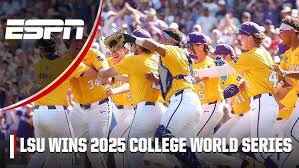
Under the blinding heat and scrutiny of Omaha, Nebraska, the LSU Tigers achieved more than just a championship sweep over Coastal Carolina. They solidified a dynasty. Their victory in the 2025 Men’s College World Series (CWS) marked the program’s eighth title and, crucially, the sixth consecutive national championship for the Southeastern Conference (SEC). This dominance goes beyond talent; it is a powerful statement about money, recruitment, and the shifting power balance in American college sports. We break down the thrilling final, the explosive controversy that defined Game Two, and what LSU’s blueprint for success means for every other team hoping to compete for college baseball’s most coveted prize.
A Final Defined by Discipline and Dissent
The best-of-three series against a previously undefeated Coastal Carolina Chanticleers (56-13) was a tense affair, quickly becoming a study in composure versus chaos.
Game One was a masterclass in pitching, dominated by LSU ace Kade Anderson, who threw a complete-game shutout in the 1-0 victory, earning him the eventual Most Outstanding Player award. The series turned dramatically in Game Two.
Coastal Carolina, known for their gritty resilience, saw their game plan unravel early. In the bottom of the first inning, a contentious balls and strikes call led to an immediate and fiery argument from Chanticleers head coach Kevin Schnall. Despite being issued a warning, Schnall persisted, resulting in his highly controversial ejection alongside his first base coach.
With their leader gone just moments into the championship game, the Chanticleers were visibly shaken. While they briefly took a lead, LSU capitalized on the momentum shift. The Tigers chased Coastal Carolina’s ace pitcher out of the game in a devastating four-run fourth inning, ultimately securing the 5-3 win and the national title. The incident serves as a stark reminder of how quickly championship aspirations can be derailed by a loss of focus under extreme pressure.
The Good: LSU’s Rebuilt Super Team
LSU’s triumph was historic, not just for the school, but for Head Coach Jay Johnson, who secured his second national title in just three seasons. His achievement is all the more remarkable considering the Tigers had lost a massive wave of talent to the MLB draft the previous year.
LSU’s winning formula is the modern archetype of success: the strategic blending of experience, top-tier freshmen, and the lucrative NCAA Transfer Portal. Johnson’s 2025 squad was a tapestry woven from 12 returning players, a highly rated freshman class, and critically, 10 high-value transfers.
Pitchers Kade Anderson and Anthony Eyanson, alongside freshman phenoms like Derek Curiel, demonstrated the exceptional power of this high-turnover, high-talent model. This strategy leverages the SEC’s immense financial power and visibility to attract players seeking immediate success and increased exposure for Name, Image, and Likeness (NIL) deals. It is a new brand of college baseball where recruitment is less about long-term development and more about assembling a ready-made championship roster.
The Bad: The Growing Crisis of Parity
LSU’s success, while celebrated in Baton Rouge, highlights an escalating crisis of parity in college baseball. The SEC’s six-year championship streak underscores an inherent imbalance largely driven by economics.
The financial disparity, exacerbated by the NIL era, means that SEC schools can often offer more compelling scholarship, facilities, and NIL opportunities. This creates a “rich get richer” cycle where top talent flows overwhelmingly to a handful of powerhouse conferences. The transfer portal, designed for player freedom, often becomes a vehicle to funnel that talent directly to the wealthiest programs, leaving mid-major teams—like the valiant Coastal Carolina—to rely on monumental, unsustainable win streaks just to reach the final stage.
The victory confirms that the current trajectory of college baseball is toward oligarchy. Unless significant rule changes are enacted to redistribute wealth or restrict the use of the transfer portal for immediate roster overhauls, the CWS will continue to be an internal competition among a select few super-conferences, leaving the promise of true national competition increasingly out of reach for the rest of the country.


 EditorDecember 1, 20253 Mins read











Leave a comment