
No products in the cart.


LifestyleTech  EditorNovember 29, 20252 Mins read
Beyond the Screen: Can New Mixed Reality Headsets Finally Deliver the Future?
There is evidence that the food industry designs ultra-processed foods to be highly rewarding, to maximize craveability and to make us want more and more and more
EditorNovember 29, 20252 Mins read 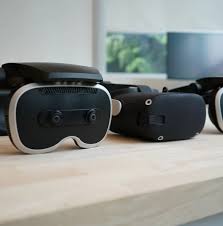
Share
For years, the promise of virtual reality (VR) and mixed reality headsets felt confined to dark gaming rooms or complex industrial training simulations. But with the refined launch of devices like the Apple Vision Pro (M5) and formidable rivals like the Meta Quest 3 and the new Even Realities G2, the conversation has fundamentally shifted to Mixed Reality (MR). The core question is no longer how immersive the experience is, but how essential it is. We spent a week working, commuting, and living inside the most advanced MR headsets of 2025 to determine if this technology truly represents the “post-screen” future of computing—or if the prohibitive price, battery life compromises, and ongoing social awkwardness are merely the growing pains of a technology still searching for its purpose outside of a demo reel.
The Vision Pro Effect: Setting the Luxury Standard for mixed reality headsets
The launch of Apple’s flagship headset irrevocably changed the landscape, establishing a new category of premium spatial computing. Unlike previous VR gear, the latest iterations of the Vision Pro focus squarely on productivity and integrating digital life seamlessly into the physical world. For the first time, users can genuinely imagine their workspace dissolving the tyranny of fixed monitors, projecting multiple large screens across their living room or café table.
This shift comes at a price. The Vision Pro’s continued technological excellence is matched only by its price tag, positioning it as a luxury work tool rather than a mass-market device. Its M5 chip, high-resolution display, and sophisticated eye-tracking create an unparalleled, if sometimes isolating, experience. This raises a vital question for NowKE’s audience: is the future of computing reserved for those who can afford its premium entry fee?
Meta and the Mission for the Masses
While Apple defines the high-end, companies like Meta continue their mission to bring Mixed Reality to the masses. The Meta Quest 3, building on its success, offers superb passthrough technology that overlays virtual objects onto the real world with impressive clarity. It has become the standard for the active user—blending fitness apps, immersive social spaces, and casual gaming.
Meta’s approach is a stark contrast: affordability and accessibility over pure fidelity. Its ecosystem is designed for immediate engagement, recognizing that for MR to truly replace the smartphone or monitor, the entry barrier must be low, and the device must be comfortable to wear for extended periods. The ongoing battle here is whether high-quality content and an open platform can overcome the sleek, but restrictive, dominance of the premium hardware makers.
The Problem of Living in the Virtual
Despite the technological leaps, our testing revealed that the biggest barriers to MR adoption remain distinctly human.
- First is the issue of presence: Wearing a bulky device in a social setting is a non-starter for most. While passthrough technology allows users to see their physical surroundings, others cannot see the user’s eyes (or only through a simulated screen), creating a feeling of distance and technological alienation. It solves the user’s problem of seeing their environment but creates a new social problem of isolating them within it.
- Second is the utility gap: For non-specialized work, the setup process and the current lack of fully integrated, everyday apps often slow down common tasks rather than accelerate them. For the average user, retrieving a smartphone is still faster than navigating a spatial interface.
The 2025 headsets have proven that the technology works. They can project incredible interfaces, create stunning virtual offices, and blur the lines between reality and simulation. What they have not yet proven is that we are ready, socially and practically, to live permanently within the post-screen world they promise. The digital future is here, but the adoption curve suggests most of us are still watching it through the looking glass, waiting for the technology to truly disappear onto our faces.





Related Articles

EnvironmentTech EditorDecember 1, 2025
Megascale Carbon Capture: How Texas’ Stratos Plant Is Changing the Game
There is evidence that the food industry designs ultra-processed foods to be...
EditorDecember 1, 2025

Lifestyle EditorDecember 1, 2025
Father’s Day Gift Ideas 2026: The Ultimate Guide to Experience Gifts
There is evidence that the food industry designs ultra-processed foods to be...
EditorDecember 1, 2025




Leave a comment